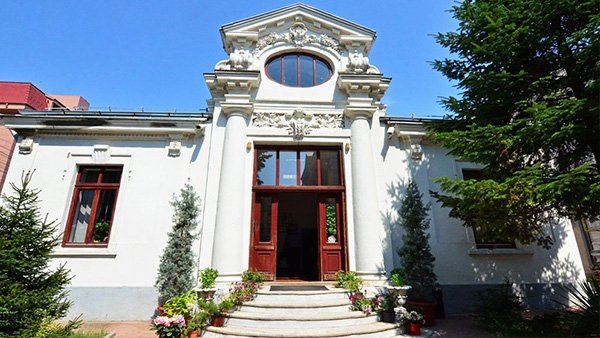
"Elena Farago" Memorial House — 9 Mihail Kogălniceanu St., Craiova
Elena Farago is one of the most beloved writers in Romanian literature — the gentle voice that accompanied the childhood of entire generations with verses about lame puppies, little bugs and punished cats. But beyond the world of childhood, Elena Farago lived a life like a novel: orphan at 12, governess at Caragiale, self-taught with only two classes of middle school, cultural foundation director for 30 years and multiple laureate of the Romanian Academy.
The Memorial House that bears her name was not her actual residence — but a space carefully chosen to recreate the atmosphere of the era and the poet's creative universe. 19th–20th century furniture, rare family photographs, original manuscripts, first editions and her personal library compose a moving picture of the life of a remarkable woman who chose Craiova as her final home.
I have no official culture, only two secondary classes. I learned and read everything I wanted to know by myself.
Life of Elena Farago — A True Novel
Bârlad 1878 → Bucharest → Craiova 1954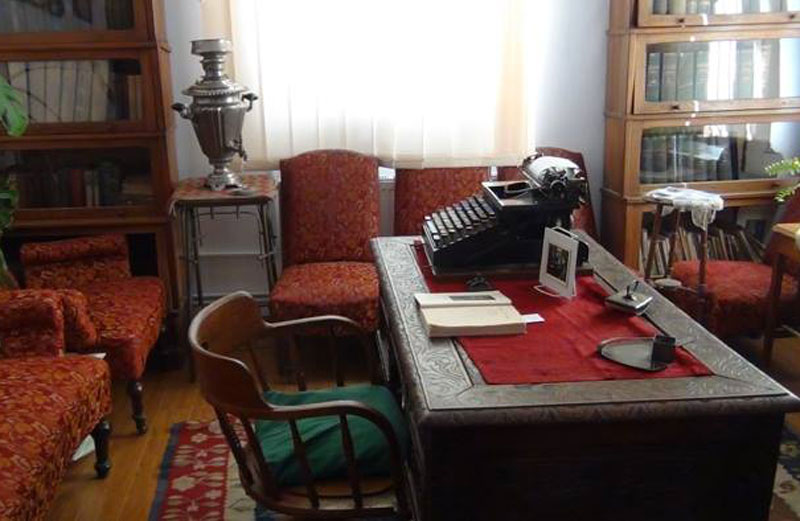
Elena Farago was born on March 29, 1878, in Bârlad, into the large family of Francisc and Anastasia Paximade — a family of Greek origin from the island of Tenedos. Three of the family's seven children died in childhood. Tragedy struck again in 1890, when Elena was only 12 years old: her mother died, leaving her to care for her younger sisters. Five years later, in 1895, her father also died, and Elena, suffering from severe anemia, left for Bucharest to live with an older brother.
In Bucharest, she tries to survive and ends up in the house of the jurist Gheorghe Panu, where she is noticed by the great playwright I.L. Caragiale. He hires her as a governess for his children — a teenager with two high school classes, but with a brilliant mind and a passion for books. In Caragiale's house, Elena comes into contact with the literary world of Bucharest and meets Francisc Farago, the painter who would become her husband.
1921 is the year that brings her definitively to Craiova: she is appointed director of the "Alexandru and Aristia Aman" Foundation — a position she will exercise for 30 years, transforming the library into one of the best in southern Romania. She died in 1954 in Craiova, after a long disabling illness.
Timeline of Life
1878 — 1954Elena Paximade is born in Bârlad, in the family of a Greek from Tenedos Island. She attends the Varlaam boarding school and the first middle school classes.
Her mother dies. Elena takes over the care of her younger sisters. The family goes through cumulative losses — three children had already died.
Left without a father and suffering from anemia, Elena leaves for Bucharest to live with an older brother. She becomes a governess for I.L. Caragiale.
Publishes her first reportage, signed with the pseudonym "Fatma". Entry into the world of journalism and literature.
Publishes her first poem in the newspaper "România Muncitoare". Her talent and sensitivity are immediately noticed.
Publishes the volume Versuri (1906) and Șoapte din umbră (1908). Receives the Adamachi Award of the Romanian Academy — becomes the first consecrated poet of modern Romania.
Donates a large sum to the families of peasants killed in the 1907 revolt. She is briefly arrested for sympathy with the movement, released through the intervention of a benefactor.
Is appointed director of the "Alexandru and Aristia Aman" Foundation in Craiova. A position she holds for 30 years, transforming the institution.
Founds the literary magazine "Năzuința" in Craiova, with exceptional collaborators: Ion Barbu, Camil Petrescu, Perpessicius, Victor Eftimiu, Simion Mehedinți.
Receives the Neuschotz Award of the Romanian Academy for the volume Ziarul unui motan (1924). Subsequent royal distinction: Bene Merenti Medal and the Order of Cultural Merit.
Supports and patrons the educational magazine for children and youth "Prietenul copiilor" — contributing to forming the literary taste of a generation.
Elena Farago passes away in Craiova, after a long disabling illness. Her literary legacy remains alive in schools and kindergartens across Romania.
Literary Work
8 volumes of verse · 12 books for children · TranslationsWith 8 volumes of verse and 12 books of poems for children, Elena Farago is one of the most prolific poets of Romanian literature in the first half of the 20th century. Her creation has two distinct levels: lyrics for adults — meditative, sensitive, situated between Coșbuc's neoclassicism and a discrete, melodious symbolism — and poetry for children, for which she remained in the collective consciousness.
Elena Farago translated into Romanian works of the great European thinkers: Henrik Ibsen (Norwegian drama), Friedrich Nietzsche (German philosophy), Maurice Maeterlinck (Belgian symbolism). Translations made by a self-taught woman, with only two classes of high school — a remarkable intellectual achievement for the era.
Poems Loved by Generations of Children
Heritage of Romanian childhood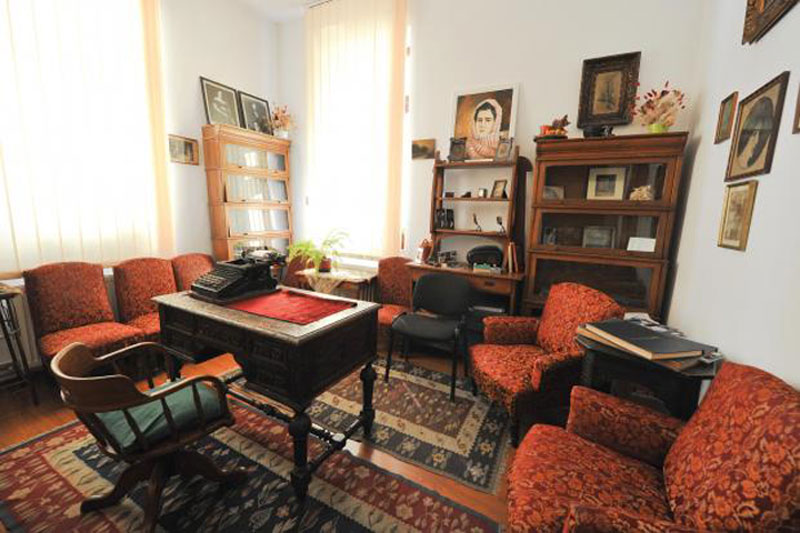
Elena Farago's most famous poems are part of Romania's intangible cultural heritage — verses that Romanians know by heart, from kindergartens and elementary schools. What makes them special is the ability to convey empathy, compassion and respect for all living beings — moral lessons dressed in simple, memorable rhymes.
Awards and Distinctions
National and royal consecration"Adamachi" Award — Romanian Academy (1908)
For the volumes Șoapte din umbră and Traduceri libere — the first official national recognition. A woman with two high school classes wins the country's most prestigious literary prize.
"Adamachi" Award — Romanian Academy (1920)
A second time for Șoaptele amurgului and Din traista lui Moș Crăciun. Confirmation of consecration in both directions of her work: lyrics for adults and poetry for children.
"Neuschotz" Award — Romanian Academy (1927)
For the volume Ziarul unui motan (1924) — a third academic recognition, confirming Elena Farago's central place in interwar Romanian literature.
"Bene Merenti" Medal Class I
Awarded by King Carol II for exceptional literary merits. Royal recognition of her contribution to national culture.
Order of "Cultural Merit" — Knight Class II
Royal distinction awarded by Carol II for sustained cultural contribution — both literary and as director of the Aman Foundation.
History and Charm of the Memorial House
9 Mihail Kogălniceanu St. · CraiovaThe "Elena Farago" Memorial House was arranged at 9 Mihail Kogălniceanu Street, near the Museum of Oltenia. Although the poet did not actually live in this building, the space was carefully chosen and arranged to recreate the Belle Époque–interwar atmosphere in which Elena Farago lived and created. It is a faithful reconstruction of the poet's intimate world, based on original objects and documents.
Entering the house is a journey back in time: the smell of old books, light filtered through vintage curtains, the ticking of a wall clock and the seraphic silhouettes of solid wood furniture. Every object on display belonged to the poet or her era — a universe reconstructed with cultural jeweler's precision.
Memorial House Collections
An incursion into the poet's universePeriod Furniture
Pieces of furniture from 1900–1950, specific to the bourgeois interiors of interwar Craiova. Authentic literary salon atmosphere.
Original Manuscripts
Holograph manuscripts of Elena Farago — poems corrected with her own hand, literary sketches and correspondence with great personalities of Romanian culture.
Family Photographs
Rare portraits of the poet, family photos, images from the literary salon of interwar Craiova and snapshots from the life of the Aman Foundation.
First Editions
The first editions of the volumes published by Elena Farago — rare books, some with holograph dedications and marginal notes by the poet.
Personal Library
The poet's personal collection of books — including translations from Ibsen, Nietzsche and Maeterlinck and correspondence with E. Lovinescu.
Diplomas and Distinctions
Romanian Academy Award diplomas, the Bene Merenti Medal and the documents of the Order of Cultural Merit awarded by King Carol II.
Active Cultural Center
Events · Workshops · Book launchesThe "Elena Farago" Memorial House is not a static museum — but a living cultural center, host to events that celebrate literature and the poet's legacy:
Around March 29 (the poet's birthday), the Memorial House organizes an annual anniversary event, with poetry recitals, exhibitions and activities for children. A special day in which Craiova pays tribute to the one who gave it an undeniable place in Romanian culture.
🤫 Curiosities about Elena Farago
She was a housekeeper at I.L. Caragiale. The young orphan Elena Paximade worked as a governess for the national playwright's children — in the house where she came into contact with the literary world of Bucharest and where she met the painter Francisc Farago, her future husband. Caragiale noticed Elena's intelligence and encouraged her literary vocation. An irony of history: the genius's maid became a Romanian Academy laureate herself.
Romanian Academy Laureate with two high school classes. Elena Farago described herself: "I have no official culture, only two secondary classes. I learned and read everything I wanted to know by myself." With this minimal formal education, she won the Adamachi Award four times and translated works by Nietzsche, Ibsen and Maeterlinck. A fascinating case of self-taught genius.
She was arrested for solidarity with the rebelling peasants. In 1907, Elena and her husband Francisc donated a large sum to the families of peasants killed in the revolt suppressed by the army. She was briefly arrested — released through the intervention of a benefactor. A woman with declared socialist sympathies, who paid personally for her convictions.
She adopted an orphan boy of the 1907 revolt. In the same year of the revolt, Elena and Francisc Farago adopted Mihnea — a little boy left on the streets after his family was destroyed in the violent repression of the revolt. Impressive consistency between declared values and concrete facts.
Ion Barbu and Camil Petrescu contributed to her magazine. The literary magazine "Năzuința", which Elena Farago founded in Craiova in 1922, brought together exceptional collaborators: Ion Barbu (the poet of algebra), Camil Petrescu (the novelist), Perpessicius, Victor Eftimiu and Simion Mehedinți. A provincial magazine with a top national editorial team.
She had a rich correspondence — and maybe an affair — with E. Lovinescu. The literary critic E. Lovinescu, the most influential critic of Romanian modernism, prized and supported Elena Farago. They had an intense correspondence — and, according to some sources, perhaps something more than just simple literary admiration.
📋 Practical Information
🕙 Hours
Tuesday–Friday: 09:00–17:00Monday, Saturday, Sunday: Closed
🎟️ Fees
CJ Dolj Single Ticket: 15 leiValid 15 days for 7 museums
Students: 5 lei (separately)
📍 Address
9 Mihail Kogălniceanu St.Craiova, Dolj
44.3155°N, 23.7919°E
🚌 Transport
Craiova Center — 5–10 min walk
Bolt/Uber: ~5 min from the main square
🏛️ Nearby Museums
Museum of Oltenia (same courtyard)
Art Museum: 10 min walk
👨👩👧 Recommended
Families with children
Students grades I–IV
Romanian literature lovers
Combine the visit to the Memorial House with the Museum of Oltenia (in the same courtyard) and the Craiova Art Museum (Jean Mihail Palace, 10 minutes walk). With the 15 lei single ticket, you have access to all 7 museums of the Dolj County Council in 15 days — the most efficient cultural tour in Craiova!
❓ Frequently Asked Questions
The "Elena Farago" Memorial House is located at 9 Mihail Kogălniceanu Street, in the center of Craiova, near the Museum of Oltenia. GPS: 44.3155°N, 23.7919°E. It is 5–10 minutes walk from Mihai Viteazul Square. Hours: Tuesday–Friday, 09:00–17:00. Closed on Monday, Saturday and Sunday.
No, Elena Farago did not actually live in the building at 9 Mihail Kogălniceanu Street. The Memorial House was arranged after the poet's death to recreate the atmosphere of the era and her creative universe. The space houses period furniture, original manuscripts, family photographs, first editions of her works and her personal library — objects that truly belonged to the poet.
Elena Farago's most beloved poems are: The Lame Puppy (the most famous), The Little Bug, The Punished Cat, The Brood Hen, The Advice of the Fingers, The Little Frog, The Little Ant and The Swallow. They are part of the heritage of Romanian children's literature and are still studied in kindergartens and grades I–IV of Romanian schools. Elena Farago published 8 volumes of verse for adults and 12 books of poems for children.
Elena Farago worked as a governess (caregiver for children) in the home of the playwright I.L. Caragiale in Bucharest, around 1895–1898. The young self-taught orphan, with only two high school classes, came into contact there with the literary world of Bucharest. It was also in Caragiale's house that she met Francisc Farago, her future husband. Caragiale noticed Elena's talent and intelligence and encouraged her literary vocation. A fascinating life story: the maid of a national genius became a Romanian Academy laureate herself.
The "Elena Farago" Memorial House is included in the Dolj County Council single ticket — 15 lei valid for 15 days, which allows visiting 7 museum sections: Craiova Art Museum, the 3 sections of the Oltenia Museum, the Museum of Romanian Books and Exile, Elena Farago Memorial House, Brabova Kula and Cernătești Kula. The ticket can be purchased at the ticket offices of any of the museums or online.