🔔 Latest News — Craiova Art Museum
- 2026: Temporary exhibition — „Brâncuși and European Modernity" · Spring 2026
- 2026: Educational program for schoolchildren — painting and sculpture workshops in the museum
- 2026: Night of the Museums — free entry, May 17, 2026
- 2026: Restoration completed for Brâncuși Hall — new lighting and bilingual explanatory panels

Jean Mihail Palace — one of the most elegant baroque buildings in Romania
Welcome to the Craiova Art Museum — the most important visual art center in Oltenia and one of Romania's major art museums. Housed in the magnificent Jean Mihail Palace, a jewel of late baroque, the museum brings together in its halls a collection of over 8,000 works covering five centuries of European and Romanian creativity.
From the great masterpieces of Constantin Brâncuși — the most influential sculptor of the 20th century — to the paintings of Nicolae Grigorescu, Theodor Aman, Nicolae Tonitza, and Ștefan Luchian, each hall of the museum takes you through the history of art with absolute elegance. Flemish, Dutch, Italian, and French painting from the 17th–19th centuries completes a cultural landscape of rare richness for a single institution.
The Craiova Art Museum is not just an exhibition space — it is a total cultural experience. The architecture of the halls, the interior decorations of the palace, and the natural light filtered through the tall windows create the perfect setting for contemplating art. A visit here means two hours of guaranteed beauty.
Video Tour — Craiova Art Museum
Discover the collections and the palace through a virtual tour
Jean Mihail Palace — A Story Setting
🏛️ Built 1898–1907 · Architect Paul Gotterau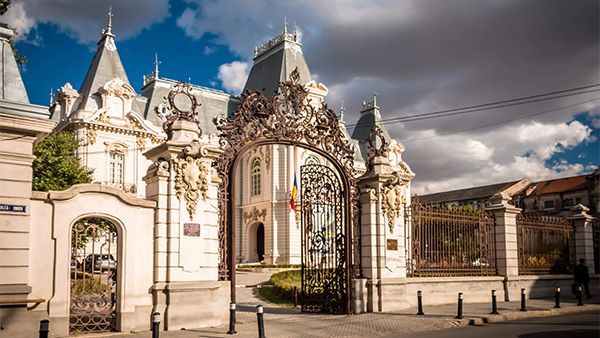
Before entering the world of art, the Jean Mihail Palace conquers you by itself. Built between 1898 and 1907 according to the plans of the French architect Paul Gotterau — the same author who designed the CEC Palace in Bucharest — the building is a masterpiece of late baroque, with sumptuous facades, balconies with carved balustrades, and a lavish interior.
The palace was the residence of the Jean Mihail family, one of the most influential and wealthiest Oltenian businessmen at the turn of the century. Construction took almost a decade, and the costs were immense for that era — which explains the exceptional level of architectural details: interior stuccos, precious wood paneling, marble and mosaic floors, monumental steps.
Since 1954, the palace has been transformed into a museum, and its reception halls, galleries, and salons have acquired a new mission: to house art. The effect is magnificent — art and architecture complement each other, creating one of the most memorable museum experiences in Romania.
Don't forget to look up in every room! The palace's painted ceilings and stuccos are themselves works of art, often overlooked by visitors concentrated on the paintings on the walls.
Constantin Brâncuși Collection
🗿 6 Original Sculptures · National TreasuresThe diamond tip of the Craiova museum's collection consists of the six original works by Constantin Brâncuși — the sculptor originally from Hobița, Gorj, unanimously considered the most important sculptor of the 20th century and one of the founders of universal modern art. To be in their physical presence is an experience that cannot be described.
Brâncuși revolutionized world sculpture by abandoning literal representation and seeking the pure essences of form. His early works, present in Craiova, show the fascinating transition from academic technique to the radical abstract language that consecrated his name in Paris, New York, and worldwide.
🗿 The 6 Brâncuși Works in the Craiova Collection
„The Kiss" in Craiova is one of the early versions of this iconic work — Brâncuși revisited the theme several times, each version becoming more abstract. The Craiova version captures the moment of grace between representation and abstraction. „Miss Pogany" is recognized worldwide after the tour of Brâncuși exhibitions — seeing it in the original is a rare privilege.
Romanian Painting — The National Masters
🎨 19th–20th Cent. · Romania's Greatest PaintersIf Brâncuși represents the peak of sculpture in the collection, the Romanian painting gallery is a treasure just as precious. The Craiova Art Museum brings together fundamental works of the most illustrious names in Romanian painting, covering nearly 150 years of artistic evolution — from the romantic academicism of the 19th century to interwar modernism.
Theodor Aman (1831–1891), founder of the School of Fine Arts in Bucharest, is present with works that define early Romanian painting. Nicolae Grigorescu (1838–1907), considered the most beloved Romanian painter, appears with his sunny and melancholic landscapes and portraits. Ștefan Luchian (1868–1916), tragic genius of early modernism, with his flowers and figures vibrating with emotion.
The collection also includes works by Dimitrie Paciurea (sculptor), Gheorghe Anghel and numerous other artists who marked the history of Romanian art.
European Art — Western Painting Schools
🌍 17th–19th Cent. · Flemish, Dutch, Italian, FrenchFew visitors know that the Craiova Art Museum holds a remarkable gallery of Western European painting — a treasure gathered over the decades, which truly places the Craiova institution in a European cultural circuit. The works come from the great painting schools of Western Europe during the golden age of continental art.
The Flemish and Dutch school (17th cent.) is represented by luxuriant still lifes, landscapes, and portraits, in the manner of the „Golden Age" of northern painting. The Italian school brings works with religious and mythological themes, with that warm light characteristic of the peninsular masters. The French school completes the picture with court portraits and genre scenes from the great century of enlightenment.
The European collection reached Craiova through several paths: acquisitions by the Romanian state after 1948, donations from private collectors, and transfers from the Ministry of Culture's funds. That such a collection is found in Craiova — and not in a museum in the capital — is in itself a small cultural miracle.
Decorative Arts and Applied Art
🏺 Ceramics, Furniture, Textiles, GlasswareThe museum's decorative art collection is an essential completion of the painting and sculpture galleries. The gathered pieces — Romanian and European ceramics, period furniture, artistic glassware, precious textiles, and embroideries — illustrate the applied dimension of human creativity, in which the useful and the beautiful blend perfectly.
Many of the furniture pieces in the collection come directly from the original equipment of the Jean Mihail Palace, which gives the halls a character of exceptional authenticity and historical coherence. The visitor has the feeling of having entered a noble residence from 1900, where art and daily life were never separated.
Temporary Exhibitions and Cultural Programs
📅 All Year · Vernissages, Workshops, EventsIn addition to the permanent collections, the Craiova Art Museum has a dynamic program of temporary exhibitions — both from its own collections, presented in new contexts, and hosted exhibitions by contemporary artists or collaborations with international institutions.
Educational programs include painting and sculpture workshops for students, themed tours, conferences on art history, and special visits for people with specific needs. Night of the Museums (May) is one of the events with the highest attendance — thousands of Craiova residents and tourists visit the museum under special conditions, often with free entry.
The museum participates in international exchange programs with institutions in Europe, which sometimes brings to Craiova art works that otherwise could only be admired in major European capitals.
Visit muzeuldeartacraiova.ro or the museum's Facebook page before your visit to see what temporary exhibition is running. Sometimes it's worth planning your visit around a special vernissage.
🤫 Curiosities and Secrets of the Art Museum
Brâncuși was born 250 km from Craiova. Constantin Brâncuși was born in 1876 in Hobița, Gorj county — a region that is part of the Oltenian cultural area. The presence of his works in Craiova is not accidental: the artist's connection with Oltenia influenced the early acquisition of his works by regional institutions.
The palace belonged to a single family before nationalization. The Mihail family — after whom the palace is named — lived in the luxurious residence for several decades. Jean Mihail financed the construction as a symbol of his social status. Irony of history: the palace built with the wealth of a private businessman ended up housing public art — accessible today to anyone.
The palace's architect also designed the CEC Palace in Bucharest. Paul Gotterau, the French architect who designed the Jean Mihail Palace, also signed the CEC Palace in the capital — one of Bucharest's emblematic buildings. Craiova thus has a direct architectural connection with the center of Bucharest.
Ion Țuculescu was a doctor before becoming a painter. One of the artists represented in the museum, Ion Țuculescu, graduated in medicine and practiced as a dermatologist before dedicating himself to painting at maturity. His visionary expressionism works are all the more fascinating when you know they were created by a scientist transformed into an artist.
Luchian painted until the end, paralyzed. Ștefan Luchian — whose works shine in the museum's collection — contracted multiple sclerosis and painted the last years from a wheelchair, with the brush tied to his trembling hand. His flower paintings from his last years are considered his most moving works.
The museum collaborates with institutions across Europe. Beyond the permanent collection, the Craiova Art Museum has hosted in recent decades exhibitions coming from France, Germany, Italy, and Belgium — a testimony that the institution is viewed as a serious partner by major European museums.
📋 Practical Information
🕙 Opening Hours
Tuesday–Sunday: 10:00–17:00
Monday — closed
Last entry: 16:30
🎟️ Fees
📍 Address
15 Calea UniriiCraiova, Dolj, 200419
44.3186°N, 23.7984°E
🚕 How to get there
City Center — 5 min walk from Piața Mihai Viteazul
Bolt / Uber available · RAT Craiova Bus
♿ Accessibility
Wheelchair access is possible on the museum's ground floor. Inquire on-site for the floor plan.
Morning (10:00–12:00) — the museum is quieter, natural light falls beautifully in the east-facing rooms. Thursday and Friday are the least crowded days. Avoid weekends during peak tourist season (May–September) if you want to admire Brâncuși without crowds. Plan at least 2 hours for a complete visit of the collections.
🏨 Accommodation near the MuseumThe best hotels in the center of Craiova, within walking distance of the Jean Mihail Palace.
🏨 Check availability on Booking.com❓ Frequently Asked Questions
The Craiova Art Museum holds 6 original works by Constantin Brâncuși: Vitellius, Girl's Head, Child's Head, Fragment of a Torso, Miss Pogany, and The Kiss. These represent one of the most important Brâncuși collections in Romania, after the National Art Museum in Bucharest. „The Kiss" and „Miss Pogany" are considered first-rank national treasures.
The Craiova Art Museum is open Tuesday–Sunday, between 10:00 and 17:00 (last entry at 16:30). Monday is the closing day. The entry ticket costs about 15–20 lei for adults and 8 lei for students and seniors. On Night of the Museums (May 17), entry is free. Check the official website or call +40 251 412 342 for updated rates.
Plan at least 2 hours for a relaxed visit that covers all permanent collections. If you are particularly interested in Brâncuși and Romanian painting, an hour and a half may be enough. For an in-depth visit with a guide or audio guide, reserve 2.5–3 hours. The museum also offers guided tours upon request — inquire at the reception.
The museum is located at 15 Calea Unirii, in the center of Craiova, about 5 minutes walk from Piața Mihai Viteazul. Options: (1) On foot from the center — simple and pleasant route; (2) By Bolt or Uber — 5–8 minutes, low fare; (3) By RAT Craiova bus on the lines serving the center; (4) By car — paid parking available in the area. GPS: 44.3186°N, 23.7984°E.
Rules for photography may vary by room and exhibition. In general, photography without flash is allowed in the permanent collections, provided you do not disturb other visitors. Photography with a tripod or for commercial purposes requires the museum's prior consent. At temporary exhibitions, restrictions may be stricter. It's best to ask at the entrance or reception for the rules in effect on the day of your visit.