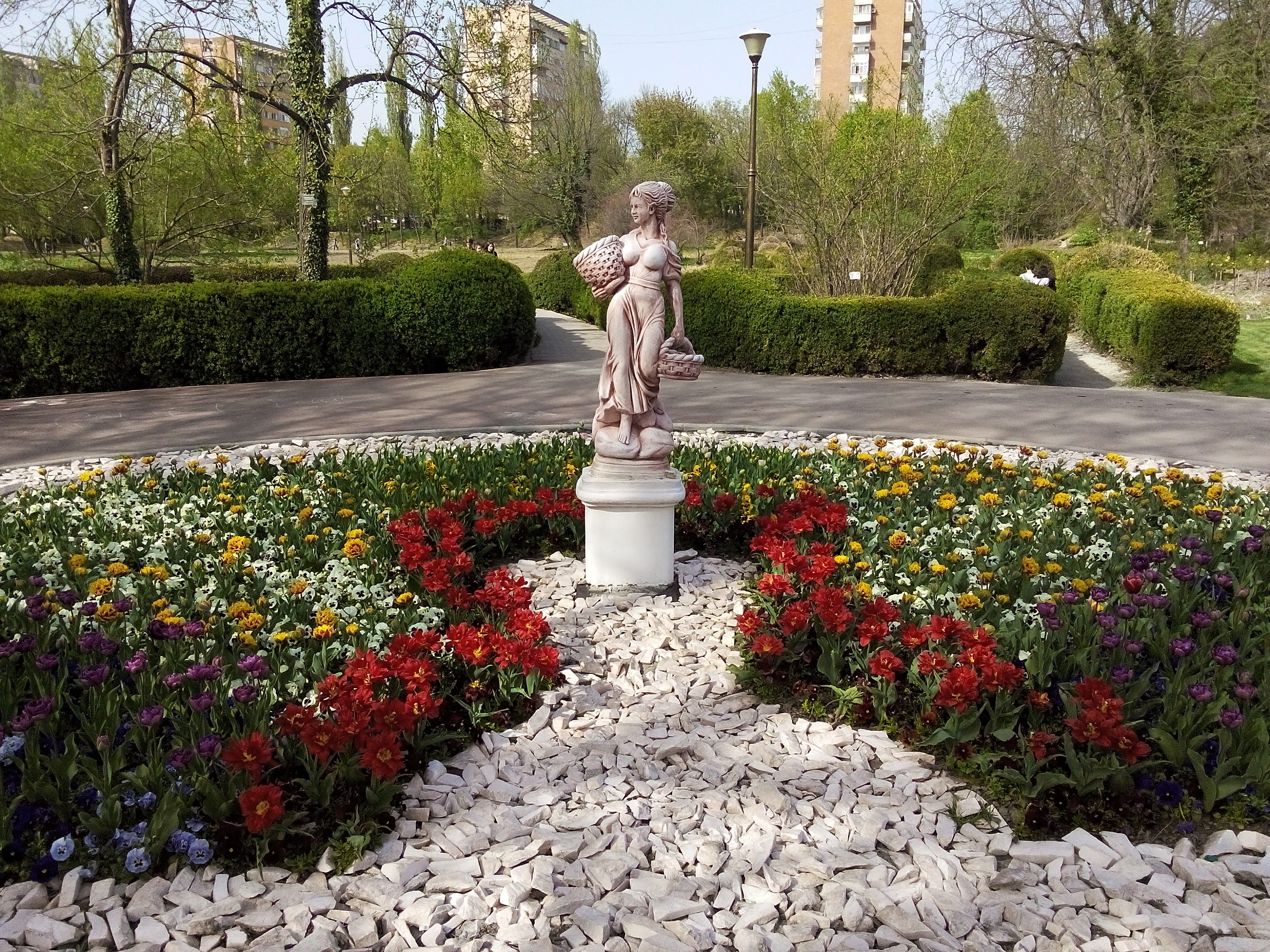
Alexandru Buia Botanical Garden — an oasis of peace and biodiversity in southwestern Craiova
The "Alexandru Buia" Botanical Garden in Craiova is much more than a place for a stroll — it is a world-class scientific institution, a living laboratory with 6,000 plant species from all corners of the world and, at the same time, one of the most beautiful oases of tranquility in southern Romania.
Founded in 1952 at the initiative of Prof. Dr. Alexandru Buia — a Transylvanian botanist transferred to Craiova in 1948 with the mission of organizing agronomic education — the garden was created on the site of the former "7 November – Jianu Fountain" municipal park. The land was initially perfectly flat: the current relief, with artificial hills up to 30 meters high, was created specifically to provide diverse ecological conditions for species from different geographical zones. A remarkable botanical engineering project for the '50s!
Today, on 17 hectares, the Botanical Garden houses 8 thematic sectors, 3 lakes, a greenhouse with an Amazonian jungle, a Japanese island, a rosarium with 250 rose varieties and an invaluable scientific herbarium of 400,000 sheets. It is the fourth largest university botanical garden in Romania (after Iași, Bucharest and Cluj) and a member of the International Association of Botanical Gardens since 1974.
Video Tour — Craiova Botanical Garden
Discover all the sectors and the beauty of the garden through a filmed tour
Ornamental Sector
🌸 145 taxa · Main entrance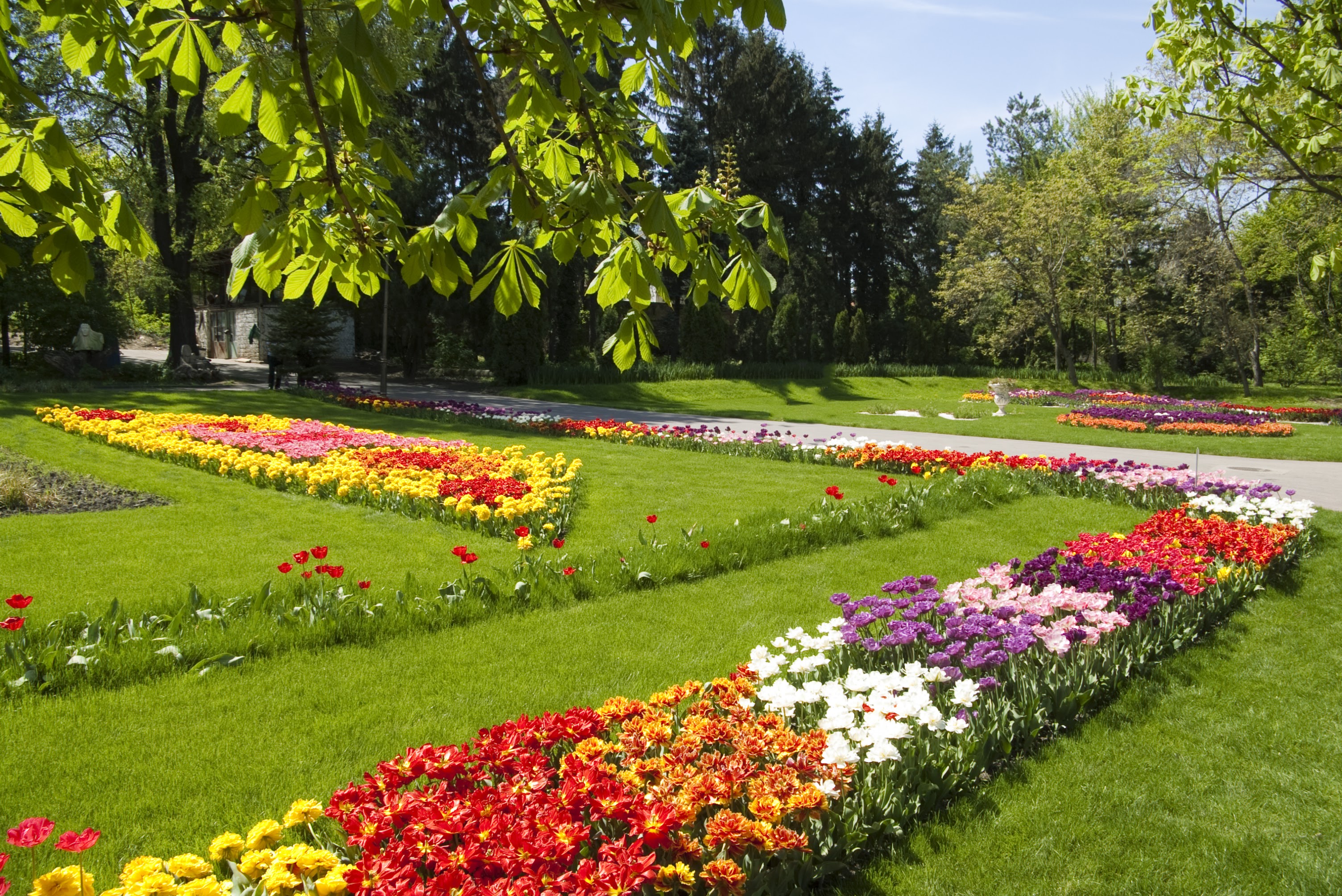
The first sector to greet you at the visitor entrance on Iancu Jianu Street, the Ornamental Sector is also the most loved by the general public — an explosion of colors, scents and surprising shapes throughout the vegetation season. With 145 taxa of decorative plants, it ensures a spectacular and pleasant scenery from the garden gate.
The most appreciated collections include: dahlias in hundreds of varieties, irises, tulips (featured at the June 1st exhibition), peonies, water lilies and numerous rare decorative plant species. It is the ideal place for photography in any season — tulips and peonies dominate in spring, dahlias and irises in summer, and the red and gold leaf displays in autumn are unforgettable.
The Ornamental Sector is at its peak in May–June (tulips, peonies, irises) and July–August (dahlias). The annual floral exhibition on June 1st brings special collections and attracts hundreds of visitors.
Floristic Provinces of Romania
🏔️ 120 taxa · Northeast area of the garden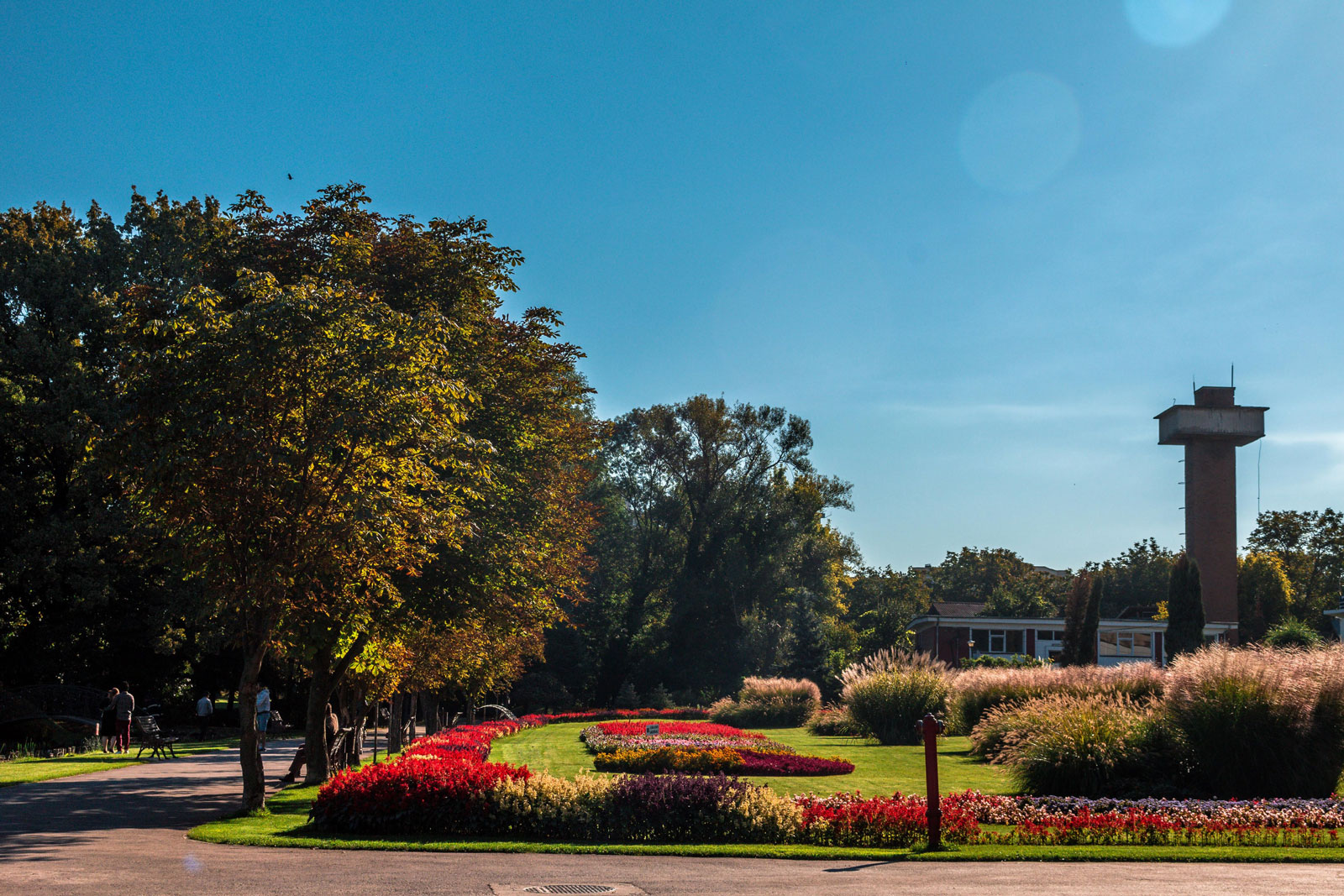
A very special sector — because Romania's nature had to be recreated artificially. The initial terrain was completely flat, and to provide the specific ecological conditions for each Romanian phytogeographical region, artificial hills and valleys with heights from 1.5 to 30 meters were created relative to the water surface of the lakes. An impressive botanical engineering feat for the '50s!
The sector reconstitutes the spontaneous flora from the main provinces of Romania: the Carpathians, Dobrogea, the Danube Delta, the Danube Plain, Moldova. The species are grouped geographically, offering a living lesson in Romanian botany. 120 taxa of rare and endemic plants from the native spontaneous flora — some hard to see in the wild.
Plant Systematics Sector
🔬 1,000 taxa · Central area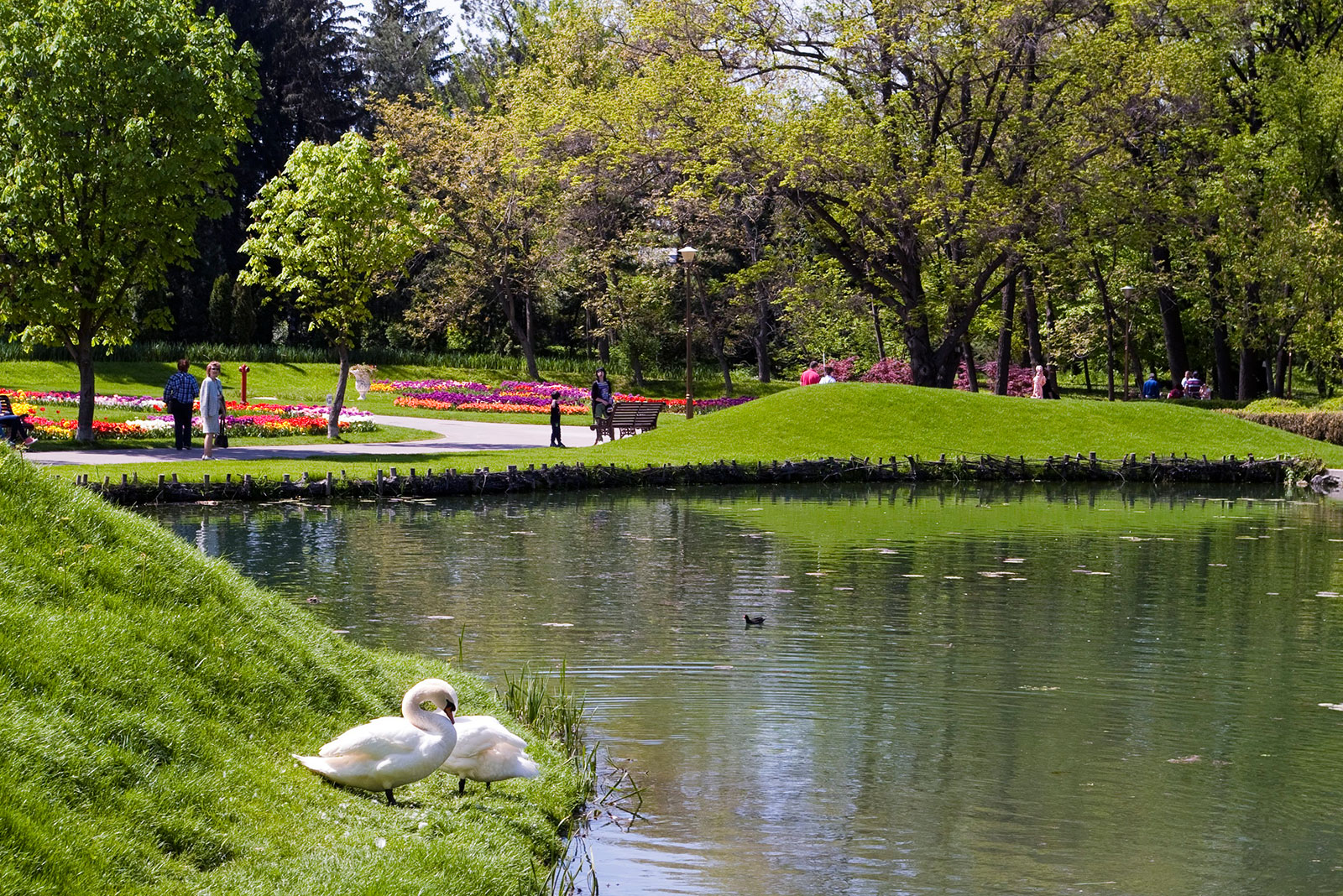
The richest sector in terms of species count — 1,000 taxa organized according to the theoretical classification developed by Alexandru Borza in 1925, following the stages of evolution from lower to higher plants and highlighting lineage relationships (phylogeny). It is practically an outdoor botany textbook.
Located in the central area of the garden, the sector also includes the main lake — a body of water populated with aquatic plants, water lilies, and various bird species. Plants are represented by cormophytes: pteridophytes, gymnosperms, and angiosperms — a complete collection for both study and contemplation.
Floristic Provinces of the Globe
🌍 1,200 taxa · Most visited sector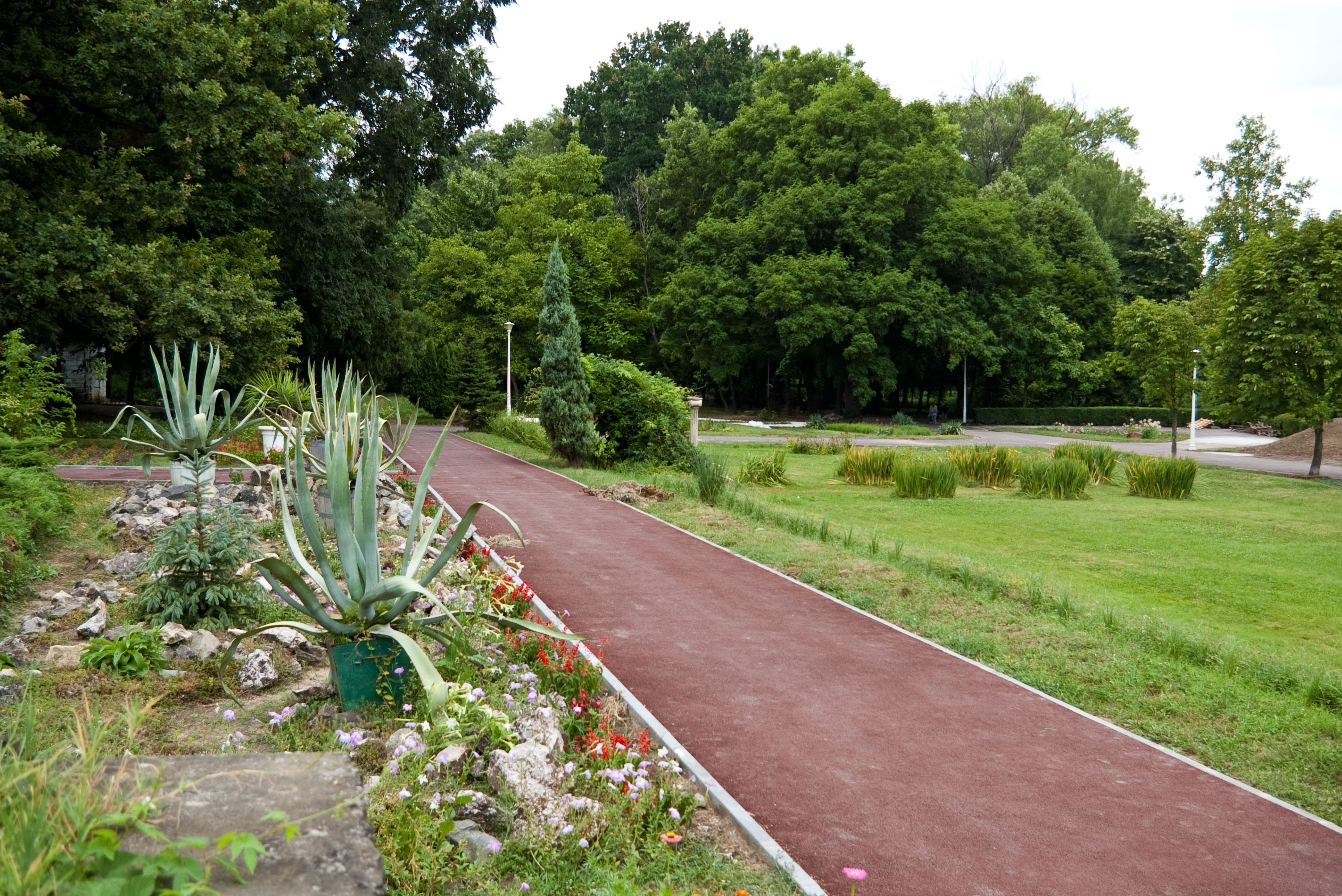
With 1,200 taxa, this is the richest and most captivating sector of the garden — a true journey around the world without leaving Craiova! The sector features five major geographical provinces: Mediterranean, Caucasian, Central Asian, Southeast Asian, and North American.
Each province recreates specific ecological conditions: soil type, humidity, light exposure. The artificial relief with elevation differences up to 30 meters allows the cultivation of species with very different requirements. 1,200 plants from 5 corners of the world — by far the most varied and spectacular in the whole garden.
The Mediterranean sector is most spectacular in May–July, with lavender, rosemary, oleanders, and Mediterranean flowering shrubs. The Caucasian and North American sectors have unique fragrances in autumn, when the colored foliage creates fairy-tale landscapes.
Taxodium and the Three Lakes
🌲 Bald Cypress · Rare North American species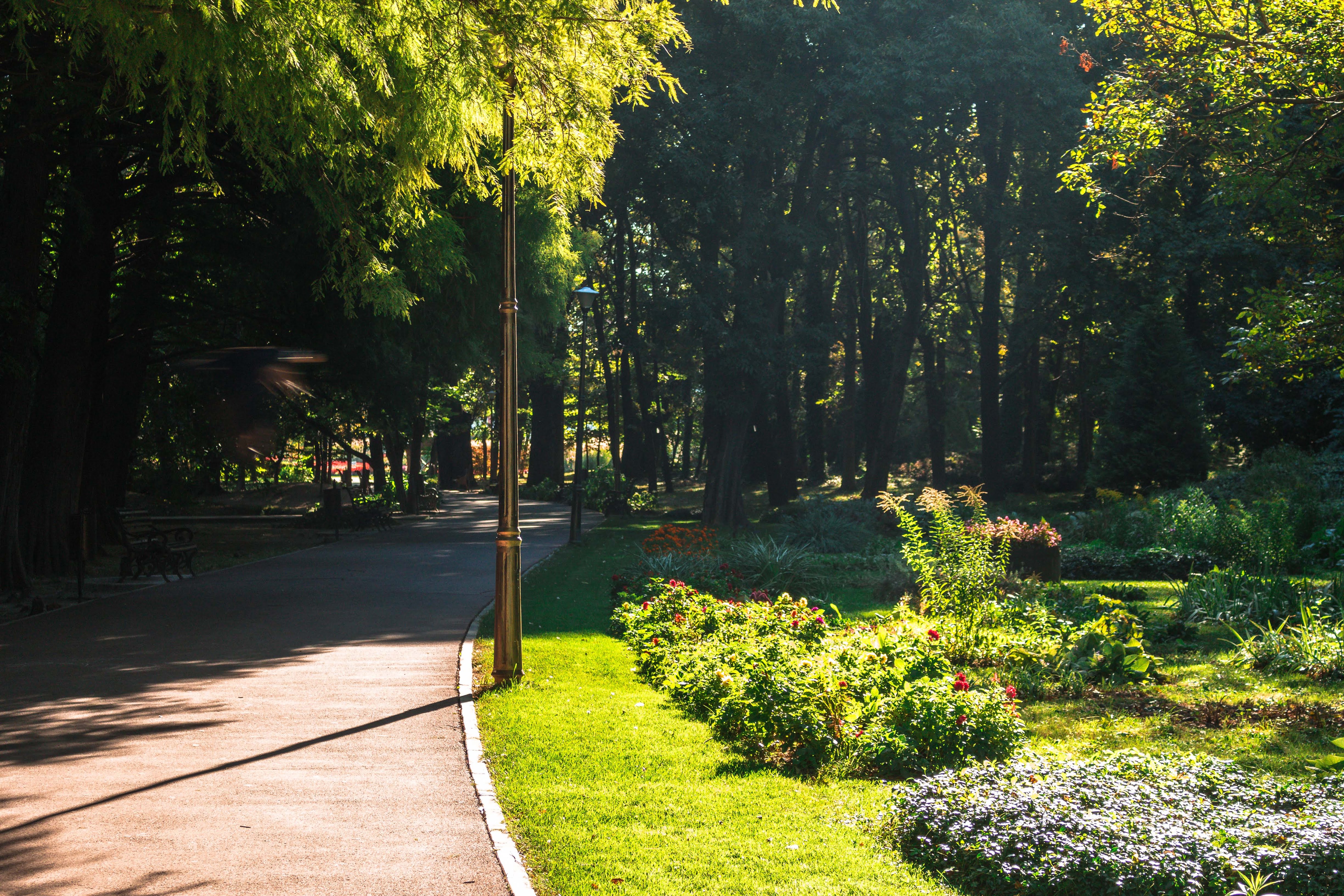
One of the botanical stars of the garden is the Taxodium (Taxodium distichum) — popularly known as the "bald cypress" — a fascinating North American tree species that naturally grows in swampy areas of the southern USA (Louisiana, Florida). In Craiova, it was strategically planted near the stream that crosses the garden, recreating its natural habitat conditions.
What makes it special: pneumatophores (aerial roots that emerge from the ground around the trunk), the imposing crown, and the spectacular rusty color of the needles in autumn before they fall. It is one of the rare deciduous conifers — meaning it loses its needles in autumn, just like deciduous trees, much to the surprise of many visitors.
The 3 lakes of the garden (total area 0.3 ha) were arranged using water from the Jianu Fountain — a historical monument built around 1800 by Hagi Stan Jianu. The lakes host species characteristic of the Systematics, Global Floristic Provinces, and Oltenia Phytogeography sectors.
Greenhouse — Craiova's Amazonian Jungle
🌴 630 taxa · 750 m² · 4 compartments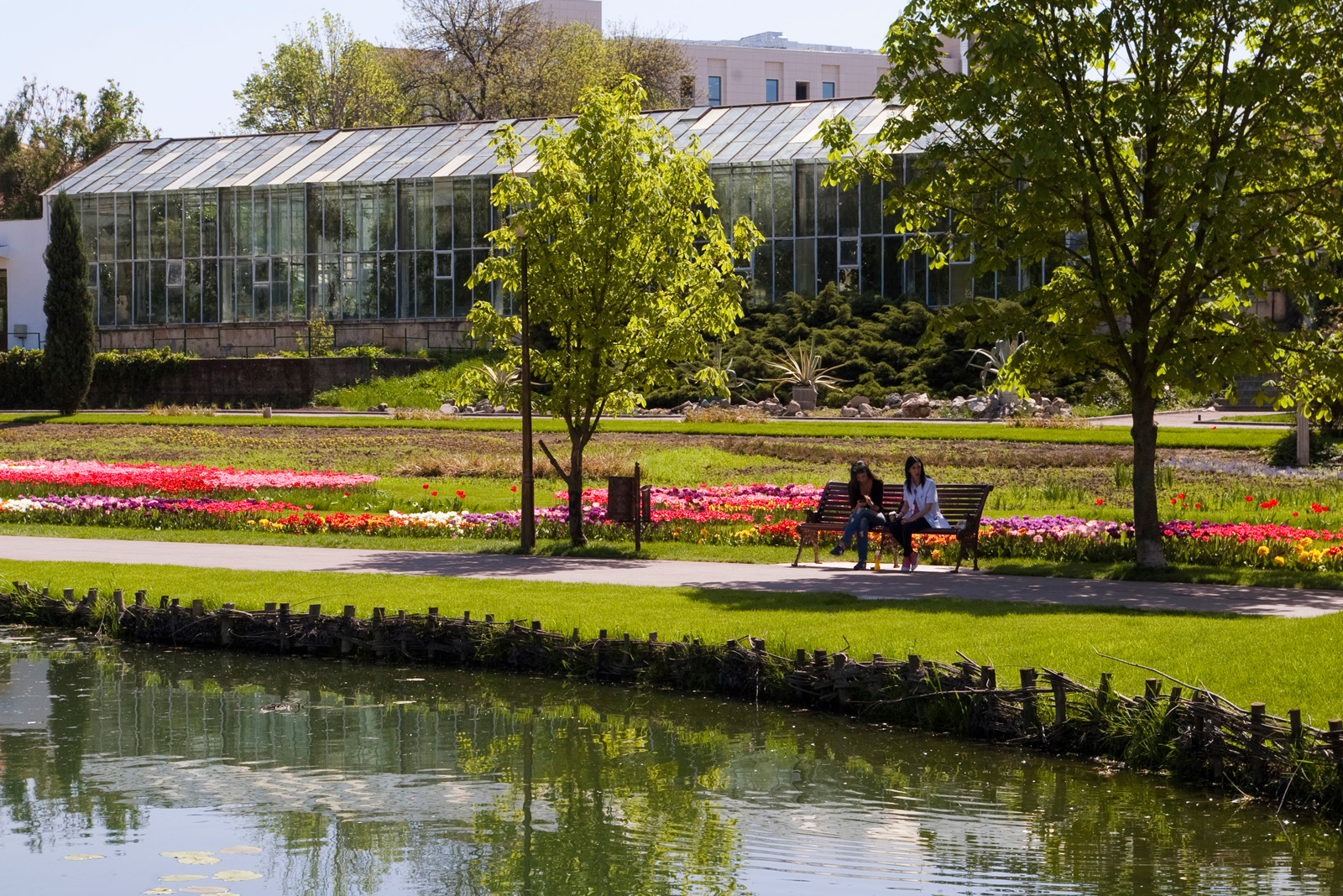
The Greenhouse sector is, undoubtedly, the most impressive and photographed space in the Craiova Botanical Garden. On 750 square meters of greenhouse, organized into 4 distinct compartments, an authentic tropical jungle unfolds — a corner of Amazonia in the heart of Oltenia.
The 4 compartments of the greenhouse: Corridor Greenhouse (transit and introductory species), Succulent Plant Greenhouse (cacti and succulents from the world's deserts), Tropical and Subtropical Plant Greenhouse (the jungle itself), and Propagation Greenhouse (reproduction of rare species). In total, 630 exotic taxa.
Absolute stars of the tropical greenhouse:
The greenhouse can be visited all year round — even in winter, when it's cold outside, tropical warmth and the dense green of the jungle reign inside. A unique experience in Craiova, free and always surprising!
Japanese Island — A Corner of Zen in Oltenia
🌸 Roses · Asian furniture · Romantic retreat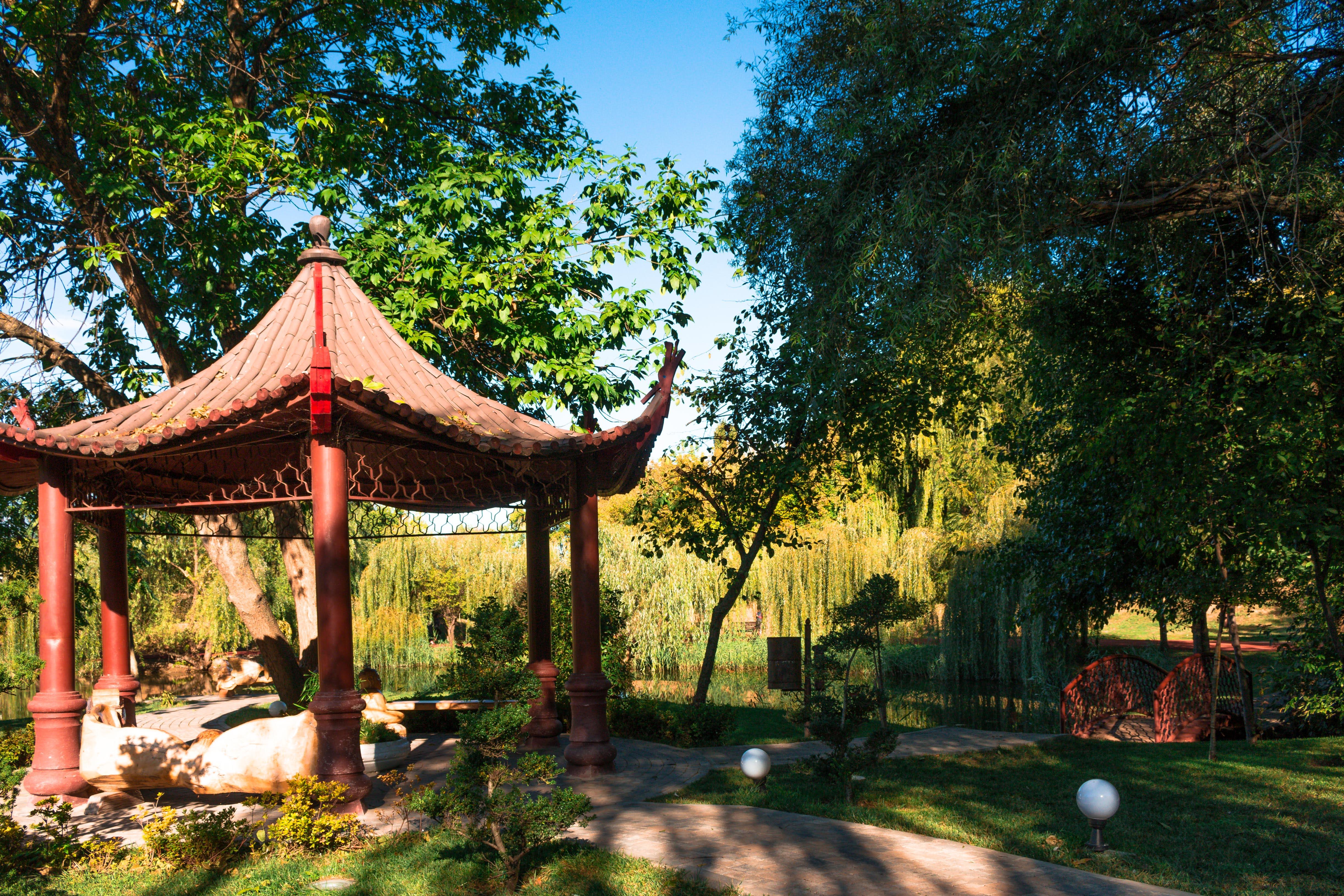
One of the most pleasant surprises of the Botanical Garden is the Japanese Island — a space tastefully and sensitively arranged in the spirit of Japanese gardening traditions. Fragrant roses, stone lanterns, Asian-style wooden furniture, miniature bridges, and carefully maintained vegetation compose a picture of unique peace and elegance.
It is the favorite place for couples and photographers in Craiova — an intimate retreat, away from the hustle and bustle, where you can spend an afternoon in complete silence. The zen atmosphere contrasts beautifully with the tropical exuberance of the nearby greenhouse, offering a complete and varied experience in a relatively small area.
In spring and summer, when the roses bloom wave after wave, the Japanese Island becomes practically a place of pilgrimage for all who love discreet beauty. Bring a book, a thermos of coffee, and prepare for hours of total peace.
Rosarium, Nursery and Cultivated Plants
🌹 250 rose varieties · 225 cultivated taxaLocated in the west and southwest of the garden, the Rosarium spans 2,000 square meters and houses an impressive collection of over 250 rose varieties — from classic Damask and Gallica varieties to modern hybrids with unique shapes and fragrances. Alongside roses, the collection includes numerous tulip varieties, completing the spectacular chromatic palette.
The Cultivated Plant Sector (northwest of the garden, 225 taxa) is divided into 6 sections for educational and scientific purposes: agrophyto-technics, vegetable growing, fruit trees, vineyard, decorative shrubs and medicinal plants. A sector less known to visitors, but essential for students of the Faculty of Agronomy.
The Nursery — adjacent to the Rosarium — is the garden's reproduction laboratory: this is where young specimens are produced to replace damaged plants in all sectors. A place of intense, discreet, but essential work for the survival of the collections.
📚 The Herbarium and the Small Botanical Museum
The Herbarium — 400,000 Sheets
One of the most valuable collections of pressed plants in Romania. It started with 10,000 sheets from the Borza collection (purchased by the University) and was completed with 20,000 sheets from Prof. Buia — plants collected from all regions of Romania, personally determined by him. Today the herbarium exceeds 400,000 sheets and is accessible to researchers, professors and students.
The Botanical Museum
Located in the lobby of the administrative headquarters, the garden's small botanical museum exhibits: samples of botanical seeds and fruits, plates and illustrations, international diplomas and awards, collections of Index Seminum catalogs published annually since the founding of the garden. A discreet treasure of Craiova's botanical history.
Index Seminum — The Annual Seed Catalog
The Botanical Garden annually publishes the "Index Seminum" catalog — the list of seeds available for exchange with other institutions. The catalog is sent to over 300 similar institutions worldwide, facilitating seed exchanges and continuous enrichment of the collections. An international practice through which Craiova is present in the global network of university botanical gardens.
🏔️ The Mountain Branch — Rânca Botanical Garden
A little-known fact: The "Alexandru Buia" Botanical Garden has a mountain branch at Rânca (Gorj county, at 1,600 m altitude), dedicated to mountain and alpine flora species. Founded by a collaborator of Prof. Buia, the researcher Marin Păun, the Rânca Mountain Botanical Garden houses rare alpine species — a perfect destination for mountain nature lovers visiting the Parâng Mountains.
🤫 Curiosities and Secrets of the Botanical Garden
The mountains are artificial. The initial terrain was completely flat. Prof. Buia and his students created a varied relief with heights from 1.5 to 30 meters above the lake surface — solely to provide correct ecological conditions for plants from different geographical zones. A colossal effort for the years 1952–1960.
Jianu Fountain — the entrance monument. The visitor entrance on Iancu Jianu St. is marked by the Jianu Fountain — a historical monument built around 1800 by the boyar Hagi Stan Jianu (the father of the outlaw Iancu Jianu). The water from this fountain feeds the 3 lakes of the garden. A fascinating link between the history of Oltenian outlaws and the world of university botany.
Craiova is connected to 300 botanical gardens worldwide through the annual seed catalog "Index Seminum". The catalog is sent annually to similar institutions on all continents, facilitating exchanges of biological material that permanently enrich the collections. A discreet and efficient botanical diplomacy.
It received the name of the founding professor 50 years after its founding. On March 13, 2002 — exactly 50 years after its establishment — the Senate of the University of Craiova voted to name the garden "Alexandru Buia" in honor of the professor who created it in 1952. Prof. Buia (1911–1964) died long before seeing the garden reach maturity.
The Dragon Tree exists in Craiova. The tropical greenhouse houses a specimen of Dracaena draco — the Dragon Tree from the Canary Islands, one of the symbolic plants of the archipelago, with a trunk as thick as an elephant's and a fascinating crown. Life expectancy: over 1,000 years. Height of mature specimens: 10–12 m. The one in Craiova is smaller, but just as impressive.
The garden has a running track! A fact known by active Craiovans but unknown to tourists: the Botanical Garden has a tartan track specially arranged for jogging — one of the few tracks of this type available to the general public in Craiova. In the morning, the garden alleys are full of runners.
🗓️ Best seasons for visiting
📋 Practical Information
🕖 Hours
07:00 – 22:00Daily, all year
including holidays
💰 Fees
Entry: Freewithout exceptions
📍 Address
26 C-tin Lecca St.Craiova, Dolj, 200217
🚪 Visitor entry
On Iancu Jianu Street (near Jianu Fountain monument)
🚌 Transport
RAT Craiova — university area
Bolt/Uber: ~8-10 min from center
🏃 Facilities
Tartan jogging track
Benches and rest areas
Toilets available
Morning (07:00–09:00) — total peace, morning light through the tree crowns, intense aromas. Towards evening (18:00–20:00) — the park comes alive discreetly, sunset light gives warm colors to the flowers. Winter — don't miss the tropical greenhouse, a fascinating contrast with the cold outside.
❓ Frequently Asked Questions
Yes, access to the "Alexandru Buia" Botanical Garden in Craiova is completely free for all visitors, in any season, between 07:00 and 22:00, daily. There is no entrance fee, there are no areas with restricted access for the public. The greenhouse and the Botanical Museum are also included for free in the visit to the garden.
The Alexandru Buia Botanical Garden houses over 6,000 taxa (species and varieties) of plants from all continents, organized in 8 thematic sectors on 17 hectares. The richest sector in terms of species count is the Floristic Provinces of the Globe (1,200 taxa), followed by Plant Systematics (1,000 taxa) and the Greenhouse Sector (630 exotic tropical and subtropical taxa).
Visitor entry to the Alexandru Buia Botanical Garden is on Iancu Jianu Street — near the Jianu Fountain, a historical monument built around 1800 by Hagi Stan Jianu. The institutional mailing address is 26 Constantin Lecca St. GPS: 44.3236°N, 23.7902°E. It can be reached by RAT Craiova buses towards the university area or by Bolt/Uber (8–10 minutes from the city center).
The Botanical Garden was founded in 1952 by Prof. Dr. Alexandru Buia (1911–1964) — a Transylvanian botanist, dean of the Faculty of Agronomy in Cluj-Napoca, transferred to Craiova in 1948 with the mission of organizing higher agronomic education in Oltenia. It was designed after the model of university botanical gardens in major European cities. On March 13, 2002, on the occasion of the 50th anniversary, the University Senate granted the garden the name of its founding professor.
The greenhouse of the Botanical Garden in Craiova is one of the city's most pleasant surprises. On 750 square meters, in 4 distinct climatic compartments, live 630 exotic taxa: banana trees from Asia and Africa, the Dragon Tree from the Canary Islands (Dracaena draco), tropical palms, carnivorous plants, orchids and dozens of other spectacular species. It can be visited for free all year round — including in winter, when the contrast with the cold outside makes the experience even more fascinating.