🔔 Latest News — Oltenia Museum
- May 2026: Museums' Night — May 17, 2026 · free entry to all sections
- 2026: Temporary exhibition: "Dacian Oltenia — 2000 years of history" · History Section
- 2026: New Planetarium program — "The Solar System in 3D" show available from Spring 2026
- 2026: Educational workshops for students — traditional pottery at Bania House
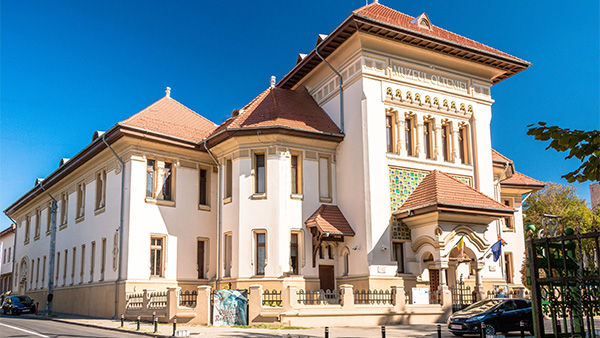
History-Archaeology Section of the Oltenia Museum, 14 Madona Dudu St.
Welcome to the Oltenia Museum in Craiova — the most important museum institution in southern Romania and the custodian of an immense heritage, accumulated over more than a century of activity. Founded in 1915, the museum preserves and presents the history, ethnography, and nature of the Oltenia region through a truly comprehensive approach.
Unlike most museums in a single space, the Oltenia Museum operates in three distinct locations in Craiova — each housing a specialized section: History-Archaeology, Ethnography (at the famous Bania House), and Natural Sciences (including the Planetarium). Together, they offer a complete and fascinating picture of Oltenia — from prehistory to the cosmos.
If you have only one day in Craiova and want to understand this region in depth — the Oltenia Museum is the first destination to visit. Plan at least 3–4 hours if you visit all three sections, or choose a single one according to your passions.
Video Tour — Oltenia Museum Craiova
Discover the sections and collections through a virtual tour
🗺️ The 3 Locations of the Oltenia Museum
The museum functions in three separate locations — each with its own personality. You can visit any or all three with a combined ticket.
🏺 History-Archaeology
14 Madona Dudu St.The main building. Dacian, Roman, medieval vestiges, coins, and historical documents.
🧶 Ethnography — Bania House
16 Matei Basarab St.Historic building 17th–18th cent. Kilims, ceramics, costumes, and painted eggs.
🔭 Natural Sciences + Planetarium
8 Popa Șapcă St.Ecosystems, flora, fauna, and the Planetarium with 10 shows about the Universe.
History-Archaeology Section
🏺 14 Madona Dudu St. · Main Building
The History-Archaeology Section is the heart of the Oltenia Museum and one of the most complete heritage collections in southern Romania. Organized chronologically, it takes you on a journey of thousands of years — from the first tools of prehistoric man on Oltenia's territory to the documents and objects of the modern era.
The core of the collection consists of antiquities from the Daco-Roman era — epigraphic monuments, Latin inscriptions, statues, architectural fragments, and everyday objects discovered on the territory of the former Roman province of Dacia. Oltenia was a territory of intense Romanization, and the traces of this process — clearly visible in the museum's collections — are fascinating.
The numismatic collection is one of the revelations of the visit: Dacian silver coins, Greek drachmas, Roman denarii, Byzantine, medieval, and Romanian coins — a complete monetary chronology reflecting the trade exchanges and civilizational influences of the region over millennia. Alongside are prehistoric antiquities — ceramics, stone and bronze axes, ornaments — and collections of photographs and documents of historical monuments that have disappeared or are endangered.
The Romanian medals collection and the Dacian goldsmith pieces are among the most spectacular exhibits. Ask for the section map at the entrance — exhibits are numbered and there are explanatory panels in Romanian and English.
Ethnography Section
🧶 Crafts · Traditions · Oltenian IdentityThe Ethnography Section is the soul of the Oltenia Museum — the place where Oltenian identity and traditions come to life in objects of authentic beauty. The collection brings together thousands of pieces of folk art and rural ethnography, collected from the communes and villages of Dolj County over more than a century.
The centerpiece of the collection is represented by the old Oltenian kilims — hand-woven carpets with geometric and floral motifs characteristic of the region, with natural colors obtained from plants. Each kilim is a visual document of the community that created it, reflecting beliefs, symbols, and the aesthetic taste of rural Oltenia.
Alongside are the peasant costumes — shirts, "ii", skirts, "opinci", and pieces of artistic folk wear worked with colored thread embroidery, often on homemade fabric. Traditional ceramics from the Oboga area and other Oltenian centers, painted eggs for Easter, wood-carved agricultural tools, and household objects complete a living picture of Oltenian rural civilization.
Oltenia was one of the regions with the liveliest tradition of folk art in Romania — Oltenian kilims (especially those from the Gorj and Dolj areas) have reached ethnographic collections in Europe and North America. The museum's specimens are authentic and dated, giving them exceptional documentary value.
Bania House — Seat of Ethnography
🏛️ 16 Matei Basarab St. · 17th–18th Cent.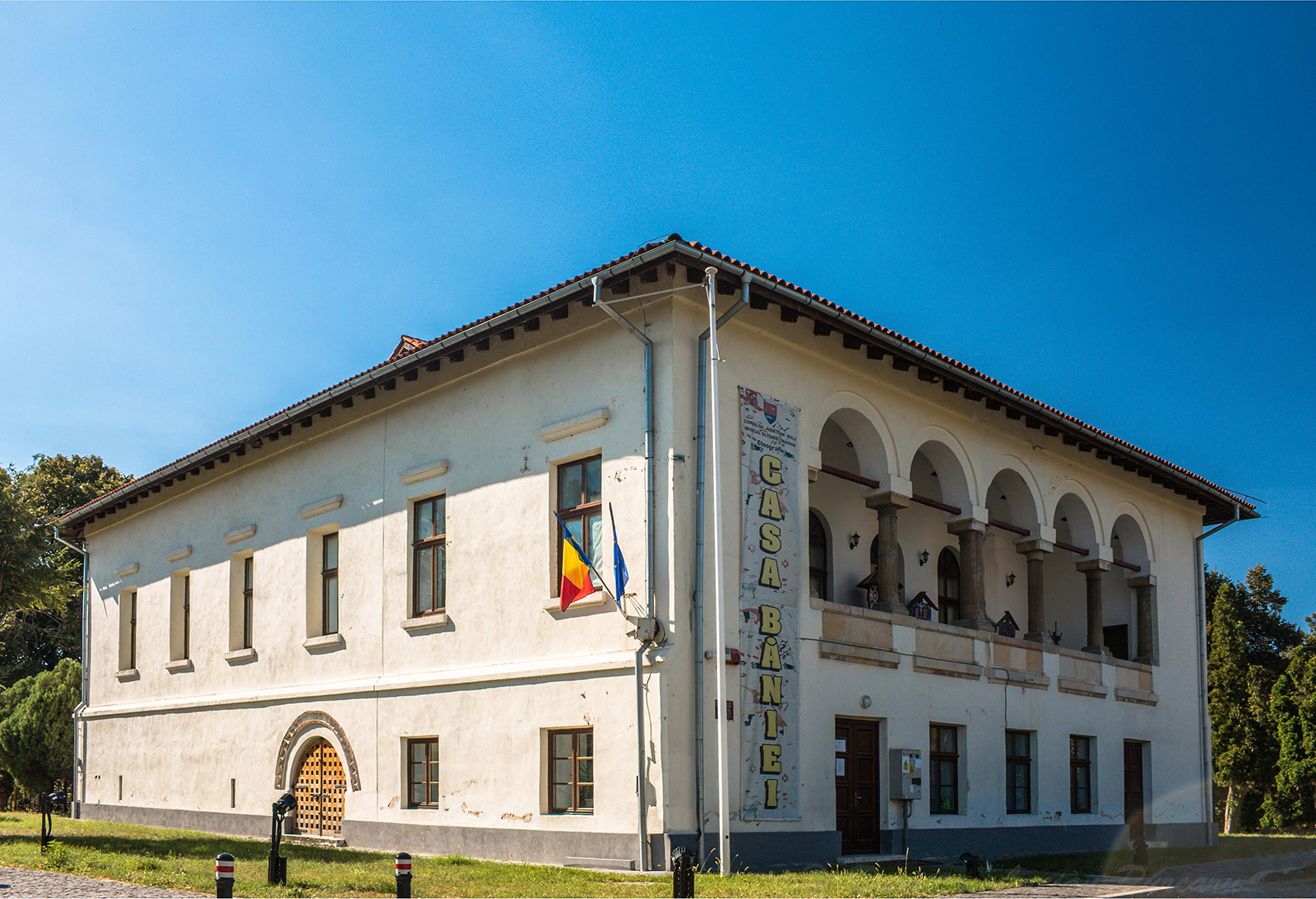
The Ethnography Section stands out not only for its collections — but also for the exceptional setting in which it is housed. Bania House (Casa Băniei) is one of the oldest civil buildings preserved in Craiova, dating from the 17th–18th centuries, and has a first-rate historical story.
"Bania" designated the seat of the Ban — the military and administrative governor of Oltenia in the medieval period. The Ban of Oltenia was one of the most powerful offices of Wallachia, with full authority over the province. Bania House served as the official residence of these high dignitaries, witnessing centuries of turbulent history — Ottoman dominance, Austrian occupation, Phanariot reforms.
The building's architecture — with arches, an inner courtyard, and construction elements specific to the era — is itself a must-see exhibit. Visiting Bania House is recommended both for the ethnography collection and for the history of the building itself, one of the few testimonies of medieval Oltenian civil architecture.
The inner courtyard of Bania House offers superb photographic angles — the old stones, arches, and vegetation create an atmosphere of past centuries. Best time: morning, when the light falls obliquely through the arches.
Natural Sciences Section
🌿 8 Popa Șapcă St. · Ecosystems & UniverseThe Natural Sciences Section is the most surprising component of the Oltenia Museum — and frequently the most appreciated by children and families. Organized on three levels, it offers a complete educational experience about the natural world, from the geological layers of the Oltenian earth to the edges of the galaxy.
Ground floor — Oltenia Terra Fossilis introduces you to the geological history of the region: marine fossils from the Mesozoic era, prehistoric shark teeth, remains of Pleistocene mammals (including mammoth and woolly rhinoceros) discovered on Oltenia's territory. It is proof that where vineyards and wheat fields grow today, millions of years ago a warm ocean stretched.
1st Floor — Physico-Geographical Conditions and Oltenia's Ecosystems presents the current biodiversity of the region: flora characteristic of Oltenia's plains, hills, and mountains, vertebrate fauna (fish, amphibians, reptiles, birds, mammals) in naturalistic dioramas. The exhibitions are designed as both recreation and learning spaces.
The Natural Sciences Section is most suitable for visits with children. Animal dioramas, giant fossils, and especially the Planetarium create a memorable experience for any age. Book a Planetarium show in advance if visiting with a group of children.
The Planetarium — A Journey into the Universe
🔭 2nd Floor · 250 m² · 10 ShowsThe highlight of the Natural Sciences Section is the Planetarium — a unique experience in southern Romania. Set up on an area of 250 square meters on the second floor, the Planetarium brings together two rooms with complementary purposes: one dedicated to scientific information about the Universe and a second — the heart of the installation — with a projection of the celestial vault.
The first room presents the science of the cosmos: the origin and organization of the Universe, galaxies and galaxy groups (including the Milky Way), stars, constellations, and the Solar System in detail — the Sun and all eight planets (Mercury, Venus, Earth, Mars, Jupiter, Saturn, Uranus, Neptune), plus former Pluto. Explanatory panels combine NASA photos with clear infographics.
The second room — The Projection Hall is the heart of the Planetarium. Through 10 different shows, the public can admire the dynamic image of the celestial vault, the night sky map, a virtual journey among stars, constellations, planets, and asteroids. Shows are available both for student groups (mandatory reservation) and for individual visitors.
🌌 The Planetarium's 10 Shows
Shows at the Planetarium take place at fixed hours and can be booked in advance for school groups. Check the show schedule on muzeulolteniei.ro or call the reception. A show lasts 45–60 minutes.
🤫 Curiosities and Lesser Known Facts
Oltenia was covered by ocean 10 million years ago. Marine fossils discovered in the geological layer at shallow depths in the Oltenian plain — and exhibited in the Natural Sciences section — prove that this region was a seabed in the Neogene era. Dioramas in the museum visually reconstruct this lost world.
Bania House survived multiple fires and earthquakes. Built in the style of medieval Wallachian architecture, Bania House has gone through several reconstructions and repairs throughout history — including after the 1977 earthquake. That it reached our days largely intact is a small architectural miracle.
Oltenian kilims have reached museums in Europe and America. Traditional carpets from Oltenia — especially from the Gorj and Dolj areas — are internationally recognized for their artistic quality. Ethnographic museums in Germany, France, and the USA hold Oltenian specimens. The Craiova collection brings together hundreds of authentic pieces.
Thousands of Dacian coins were discovered in Oltenia. The Dacians in Oltenia minted their own silver and gold coins, inspired by the Greek drachma. The museum's numismatic collection includes extremely rare specimens, some recovered from treasures discovered accidentally by farmers in the fields of Dolj County.
The Planetarium in Craiova is the only one in southern Romania. Although it's not the largest in the country, the Oltenia Museum Planetarium remains the only installation of its type in southern Romania, serving hundreds of school groups from the region each year. Shows are updated periodically with new astronomical data.
The museum was founded in 1915, in the midst of WWI. The founding of the museum in 1915 — just before Romania entered the war — reflects the local authorities' will to save and preserve regional heritage under extremely difficult conditions. The first collections were gathered from donations by individuals and priests in the county.
📋 Practical Information
🕙 Schedule
Tuesday–Sunday: 09:00 AM – 5:00 PM
Monday — Closed
Last entry: 4:30 PM
🎟️ Rates
📍 Addresses
History: 14 Madona Dudu St
Ethnography: 16 Matei Basarab St
Nature: 8 Popa Șapcă St
🚕 How to get there
Craiova Center — 5–10 min walk from Piața Mihai Viteazul
Bolt / Uber available · RAT Craiova
⏱️ Recommended time
One section: 1–1.5 hours
All 3 sections: 3–4 hours
With Planetarium: +1 hour
If you visit all three sections in one day, start the morning with the History Section (Madona Dudu St), continue in the afternoon with Bania House, and finish with the Natural Sciences Section and the Planetarium. Book in advance a Planetarium show — seats are limited. Museums' Night (May 17) offers free entry to all sections and special programs.
🏨 Stay Near the MuseumHotels in downtown Craiova, within minutes of all three Oltenia Museum locations.
🏨 See availability on Booking.com❓ Frequently Asked Questions
The Oltenia Museum has three distinct sections, each at a separate address: (1) History-Archaeology Section — 14 Madona Dudu St (main building); (2) Ethnography Section — Bania House, 16 Matei Basarab St; (3) Natural Sciences Section and Planetarium — 8 Popa Șapcă St. There is a combined ticket that allows access to all three sections in a single day.
The Oltenia Museum Planetarium is located on the 2nd floor of the Natural Sciences Section (8 Popa Șapcă St) and has an area of 250 m². It offers 10 different shows about the Universe, Solar System, constellations, and the celestial vault. Shows run at fixed hours, with a duration of 45–60 minutes. Advance booking is recommended for groups. Check the current schedule on the official website or by calling the reception.
Bania House (16 Matei Basarab St) is one of the oldest civil buildings preserved in Craiova, dating from the 17th–18th centuries. It was the residence of the Bans of Oltenia — dignitaries who governed the province. Today it houses the Ethnography Section of the Oltenia Museum, with a valuable collection of old Oltenian kilims, peasant costumes, traditional ceramics, and painted eggs. The building itself is a national historic monument and is worth visiting both for the collection and for its medieval architecture.
For a complete visit of all three sections, plan for 3–4 hours (including travel between locations). If you add a show at the Planetarium, add another hour. If you visit a single section, 1–1.5 hours are sufficient. We recommend starting with the History Section in the morning, continuing with Bania House, and finishing with the Natural Sciences Section and Planetarium in the afternoon.
Yes, especially the Natural Sciences Section and the Planetarium are extremely attractive for children — animal dioramas, large fossils, and Planetarium shows are memorable experiences. The Ethnography Section, with its costumes and colorful objects, is also accessible to children. The History Section is more suitable for older children (10+) and teenagers. The museum frequently organizes educational workshops dedicated to student groups.